
Learn to figure
it out.™
Answers are everywhere now. Knowing what to do when you don’t have one is rare — so that’s what we teach, starting at eight weeks old.
The big idea
We teach children what to do when they don’t know the answer.
Most schools are built to deliver answers. We’re built around the moment just before one — the pause where a child decides whether to give up, wait for an adult, or try something.
That moment is a teachable skill. Our teachers are trained to hold it open instead of closing it, and our whole day is designed to produce it on purpose: real problems, real materials, and enough time to get it wrong twice.
Ask the better question
“Why is the worm helping the garden?” beats “what is a worm.”
“Why…?”Start without permission
Get the materials. Try the first idea. Ask for help with the plan — not for the plan.
“I’ll get it.”Break it into steps
What do we know? What can we try first? What would tell us it worked?
“First, we…”Make something new
A bridge, a story, a rule for a game — and say why it’s built that way.
“What if…?”Use ideas well
Borrow the cage design from the other team and say so proudly.
“Her idea worked.”Try the second way
The tower fell; the child looks at the base, not at the teacher.
“Again.”Six habits · drag to spin
The learning journey
A school your child
doesn’t outgrow.
Kindergarten starts this year, and we add the next grade every year after — so the class that starts here can stay here. Keep scrolling; the school unrolls sideways.
“I can discover.”
Enrolling“I can try.”
Enrolling“I can do it.”
Enrolling“I can solve it.”
Enrolling“I can figure it out.”
Enrolling · VPK approved“I can take my ideas further.”
Opens 2026 · Founding class“I can build on what I know.”
A new grade every yearAll programs →
The Innovation Advantage™
Strong foundations.
Independent thinkers.
Academics+Thinking skills=the advantage
Letters, numbers and thinking skills aren’t a trade-off. Children learn to read, count and write here — and they learn it inside real projects, where the knowledge has a job to do.
A STEAM investigation into why the class garden flooded teaches measurement, drawing, sequencing and vocabulary in one afternoon, and the child remembers it because it was theirs.
The method
Meet CAPE™
Four steps children can name by age three, and use for the rest of their lives. Watch one week in our garden move through all four.
CAPE in action · Challenge
The tomato plants kept falling over.
Our four-year-olds noticed it first, on a Monday. A teacher could have staked the plants in ninety seconds. Instead she asked the class what they thought was happening.
A Tuesday here
What learning actually looks like.
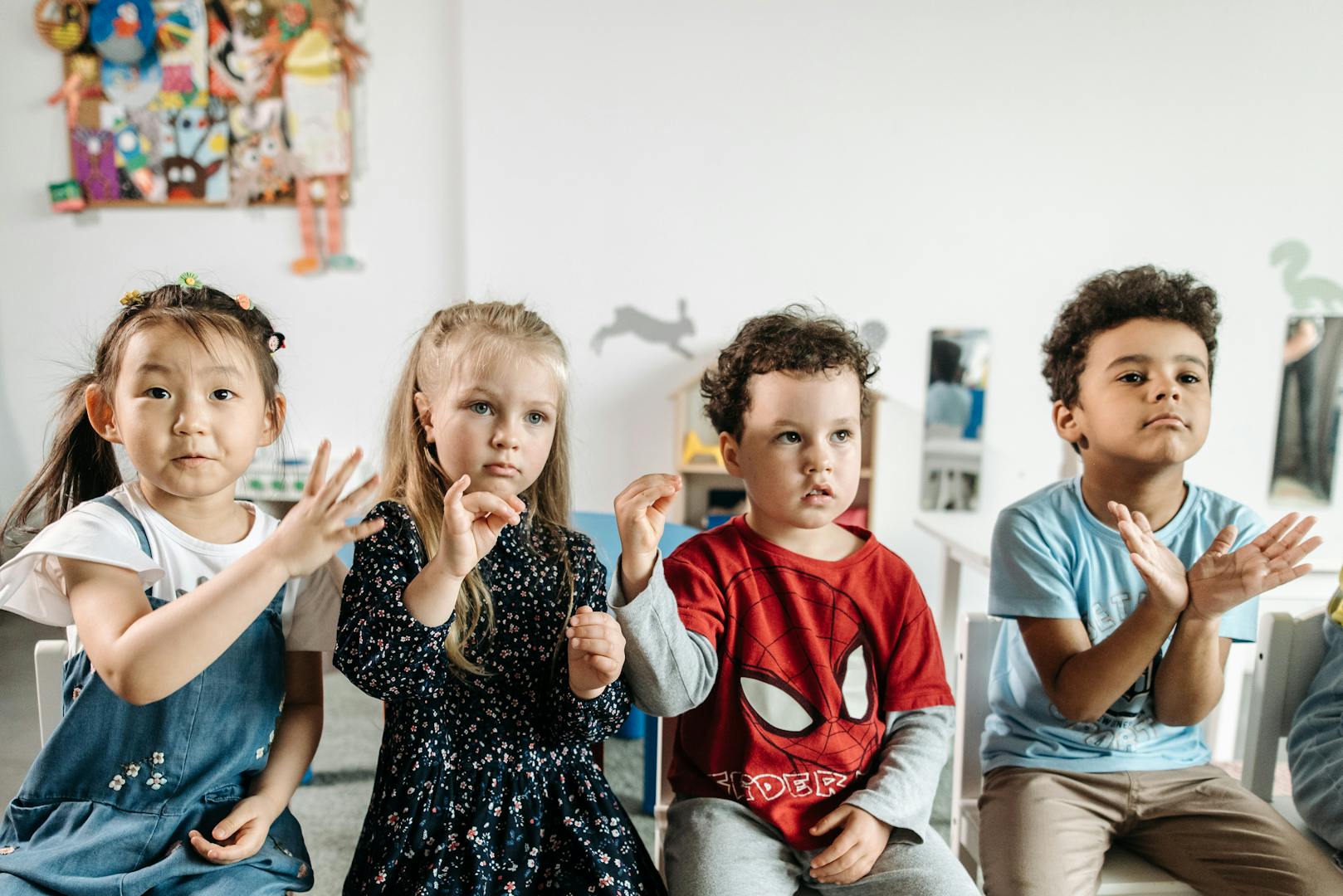 Morning meeting — every hand has a theory
Belonging
They can’t wait
to get here.
Children learn more when they love coming to school. Everything above this line — the thinking, the projects, the academics — depends on it.
So we protect the ordinary things: a teacher who knows your child’s current obsession, a best friend by the second week, time outside every single day, and a room where being wrong in front of everyone is completely normal.
Academics
Serious preparation, taught the long way round.
Thinking skills complement academic foundations — they never replace them. Children leave here ready for the next grade by any measure a school uses.
Literacy
Phonics, print awareness, dictation, and a lot of being read to.
Mathematics
Number sense, patterns, measurement — used in projects, not just worksheets.
Science
Observe, predict, test, record. The scientific method in child-sized form.
STEAM
Engineering and design challenges where art is a tool, not a decoration.
Social-emotional
Naming feelings, repairing conflict, waiting, sharing the good scissors.
Creative arts
Music, movement, drawing and making with real materials.
Physical development
Gross and fine motor skills, outdoor play every day, no exceptions.
Kindergarten readiness
Benchmarked, tracked, and shared with you — plus VPK for eligible four-year-olds.
Why this matters now
When answers are everywhere, children need to learn how to think.
Your child will grow up with instant answers to almost any question. What that changes isn’t school — it’s what school is for.
The valuable skills become the ones a machine can’t hand over: asking a question worth asking, judging whether an answer is any good, making something new, and adapting when the situation changes. We’re not a technology-driven school. We’re a thinking-driven one, which is a different and older idea.
Parents
What families tell us.
“He came home and explained why his block tower kept falling — then rebuilt it with a wider base. He’s four. Nobody sat him down and taught him that.”Parent, Preschool
“Her teacher noticed she kept watching the storm drain, so the class spent two weeks tracing where the rain goes. They followed my daughter’s question instead of a worksheet.”Parent, Two-year-olds
“We toured six schools. This was the only one where the children were in the middle of real work — measuring, arguing about a design — and barely looked up when we walked in.”Parent, Pre-K
“She used to hand me the broken toy. Now she tries two things first and tells me exactly what didn’t work. That confidence shows up everywhere at home.”Parent, Toddler
“Our son started at eight weeks old and moved up with the same teachers who knew him. The care in the infant room is the reason we stayed through Kindergarten.”Parent, Kindergarten
“Reading and math are absolutely here — but they arrive attached to something he cares about. He counts because the garden beds need counting.”Parent, Pre-K & VPK
Our school
Built in Winter Park, by people who have done this before.
The Curiosity School was founded on a simple observation from decades in early education: the children who thrive later aren’t the ones who knew the most at five. They’re the ones who knew what to do when they were stuck.
Our campus sits in Winter Park, minutes from downtown Orlando. Our educators are trained in the CAPE™ method before they ever lead a classroom.
Visit
Come see a Tuesday.
Tours run during the school day, on purpose. You’ll see real classrooms with real children in them — not a showroom.
- Address[Street address]
Winter Park, FL [ZIP] - Phone(407) 555-0100
- HoursMonday–Friday, 7:00 am – 6:00 pm
- Ages8 weeks through Kindergarten
Enrollment open
Come see what happens when children are trusted to think for themselves.
Founding Kindergarten places are limited, and infant spaces are held a year in advance. A tour takes forty minutes and tells you more than any website can.
Thank you, .
We’ll reach out within one school day to find a morning that works. In the meantime — bring your child’s best question.
Or call (407) 555-0100 · Send an inquiry